
Learning how to invest in the S&P 500 is one of the simplest, most popular ways for beginners to start building wealth. The S&P 500 tracks 500 of the largest companies in the United States, and owning a fund that follows it gives you instant diversification at very low cost. This guide explains exactly what the S&P 500 is, the two ways to invest in it, real low-cost options to look at, and a step-by-step process to buy your first shares.
Key Takeaways
- You cannot buy the index itself — you buy an S&P 500 index fund or ETF that mirrors it.
- One purchase gives you a stake in 500 large US companies — instant diversification.
- Costs are tiny: broad S&P 500 funds often charge an expense ratio around 0.02%–0.03% a year.
- You can start with as little as $1 thanks to fractional shares.
- It still carries market risk — the S&P 500 can fall sharply in downturns.
What Is the S&P 500?
The S&P 500 is a stock market index that measures the performance of about 500 of the largest publicly traded companies in the US — names like Apple, Microsoft, Amazon and hundreds of others across every sector. Because it spans so many large companies, it is widely used as a benchmark for “the US stock market” as a whole.
You cannot invest in an index directly, because it is just a list and a calculation. Instead, fund providers create index funds and ETFs that hold the same companies in the same proportions, so their value moves almost exactly with the index. New to funds? Read our beginner guide on what an index fund is.
Why Beginners Choose the S&P 500
- Instant diversification: one fund spreads your money across 500 companies, so no single business can sink you.
- Very low cost: broad S&P 500 funds are among the cheapest investments available.
- Simple: you do not have to research or pick individual stocks.
- Strong long-term track record: historically the S&P 500 has returned roughly 10% per year on average over the long run (before inflation) — though returns swing widely year to year and past performance never guarantees future results.
Two Ways to Invest in the S&P 500: Index Fund vs ETF
Both track the same index; the difference is how you buy them. An ETF (exchange-traded fund) trades like a stock throughout the day and usually has no minimum beyond the share price (or $1 with fractional shares). An index mutual fund is priced once per day and sometimes has a small minimum, but is ideal for automatic recurring investing. For most beginners either works — pick whichever your broker makes easiest.
| Fund (ticker) | Type | Approx. expense ratio |
|---|---|---|
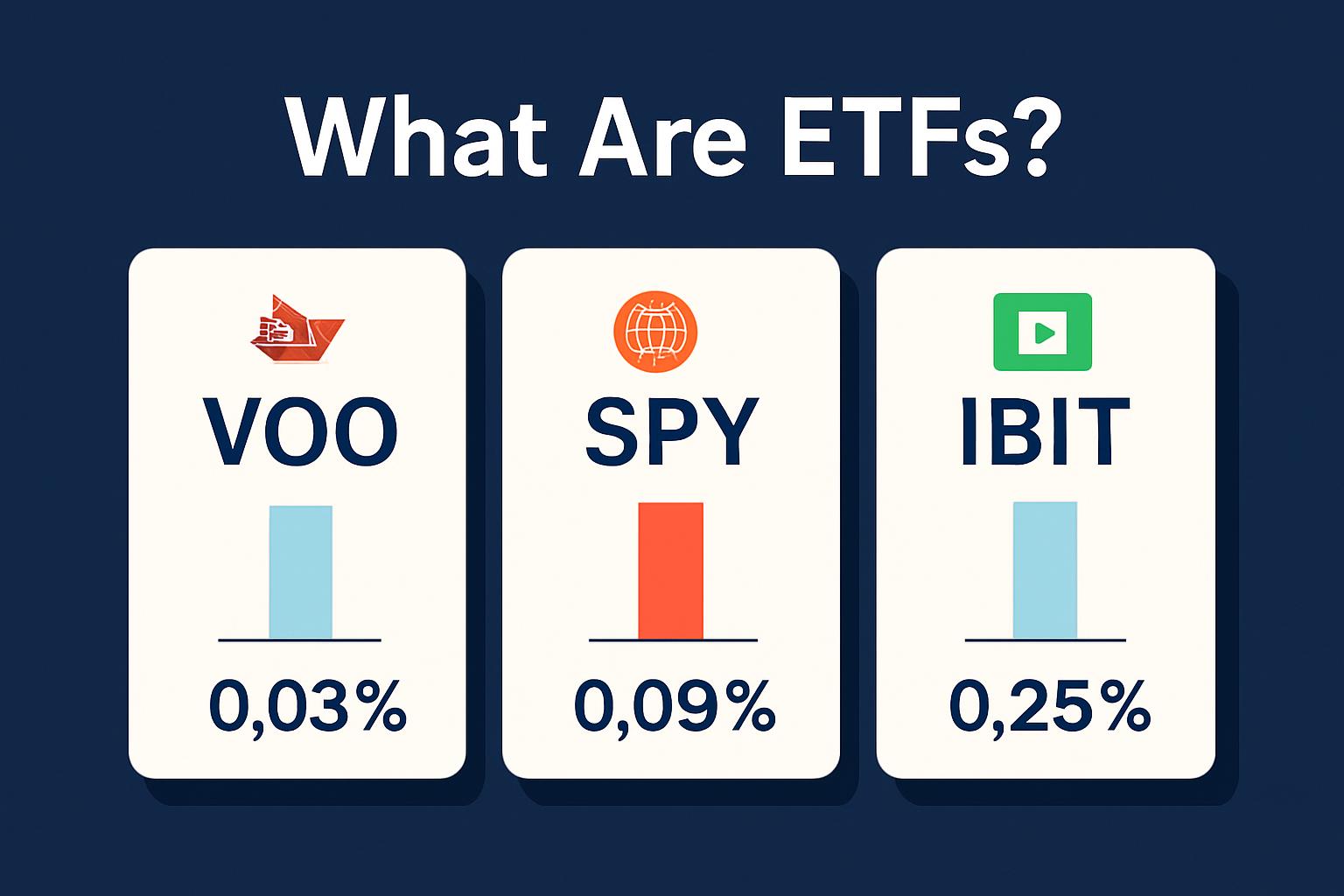
| Vanguard S&P 500 ETF (VOO) | ETF | ~0.03% |
| iShares Core S&P 500 ETF (IVV) | ETF | ~0.03% |
| SPDR Portfolio S&P 500 ETF (SPLG) | ETF | ~0.02% |
| Fidelity 500 Index Fund (FXAIX) | Index mutual fund | ~0.015% |
| Schwab S&P 500 Index Fund (SWPPX) | Index mutual fund | ~0.02% |
A note on fees: an expense ratio of 0.03% means you pay about $3 per year for every $10,000 invested — a rounding error compared with actively managed funds that can charge 1% or more.
How to Invest in the S&P 500: Step by Step
- Open a brokerage account. Choose a low-cost, beginner-friendly broker. See our guide to the best brokerage accounts for beginners and the best free investing apps.
- Fund your account by linking your bank and transferring the amount you want to invest.
- Choose your fund. Pick one broad, low-cost S&P 500 ETF or index fund from the table above — you only need one.
- Buy your shares. Enter the ticker, choose a dollar amount (fractional) or number of shares, and place the order. New to buying? Read how to buy your first stock.
- Automate and repeat. Set up a small recurring investment so you keep buying in good markets and bad — a strategy called dollar-cost averaging.
How Much Do You Need to Start?
Less than you think. With fractional shares you can begin with as little as $1, and many beginners start with $100 and add monthly. Consistency matters far more than the starting amount — see how to start investing with $100. For the broader picture of low-cost funds, our guide to why ETFs suit beginners is a useful companion.
The Risks to Understand
The S&P 500 is diversified, but it is not safe from losses. It is 100% stocks, so it falls during market downturns — drops of 20% or more have happened many times, and recoveries can take months or years. Only invest money you will not need soon, keep a longer time horizon, and avoid panic-selling when prices fall. For a neutral primer on investing basics, the SEC’s Investor.gov is a trustworthy, ad-free resource.
Frequently Asked Questions
Can I buy the S&P 500 directly?
No. The S&P 500 is an index, not a product. You invest by buying an S&P 500 index fund or ETF (such as VOO, IVV or FXAIX) that holds the same companies.
Is an S&P 500 ETF or index fund better for beginners?
Both are excellent. ETFs trade like stocks and suit fractional, flexible buying; index mutual funds suit automatic recurring investing. Pick whichever your broker makes simplest — the costs are nearly identical.
How much money do I need to invest in the S&P 500?
With fractional shares, as little as $1. Many beginners start with $100 and invest a set amount each month.
Is investing in the S&P 500 safe?
It is diversified but still carries full stock-market risk and can fall sharply. It suits long-term investors who can leave the money invested through ups and downs.
What is a good expense ratio for an S&P 500 fund?
Look for around 0.03% or lower. Since all broad S&P 500 funds track the same index, paying a higher fee gives you no advantage.
The Bottom Line
Investing in the S&P 500 is one of the simplest, lowest-cost ways for a beginner to own a piece of the US stock market. Open a low-cost brokerage account, choose one broad S&P 500 ETF or index fund, invest an amount you can leave alone, and keep adding to it regularly. Start small, keep fees low, and let time do the work. Next, compare your options in our best brokerage accounts guide.
This article is for educational purposes only and does not constitute financial or investment advice. Investing involves risk, including the possible loss of your capital. Fund names and fees are examples only — confirm current details on each provider’s official site and do your own research before investing.
- VOO vs SPY — the two big S&P 500 ETFs, compared on cost and liquidity.
- QQQ vs VOO — Nasdaq-100 versus the S&P 500 as a core holding.

Izhaq Shah is the founder of GetIntoMarkets. He holds a Master’s in Finance and Commerce, with over 10 years in the financial industry and 15 years of writing experience. He makes investing in stocks, ETFs and crypto simple and practical for everyday people building wealth with confidence.